
Quick answer
Yes, in some regions, but less than the scary numbers suggest
Data centers are one of several reasons power prices are rising, and their effect is strongest in regions with many of them, such as the large PJM grid in the eastern US. One estimate puts the extra cost at about $16 to $18 a month for an average household in parts of Maryland and Ohio. Viral figures like 267% describe wholesale power prices, not household bills, so they exaggerate the effect on your bill.
Where the 267% came from
The figure came from a Bloomberg analysis of wholesale electricity prices at certain grid points near data centers, which rose about 267% between April 2020 and April 2025. Wholesale power is what utilities pay generators. It is only part of what you pay.
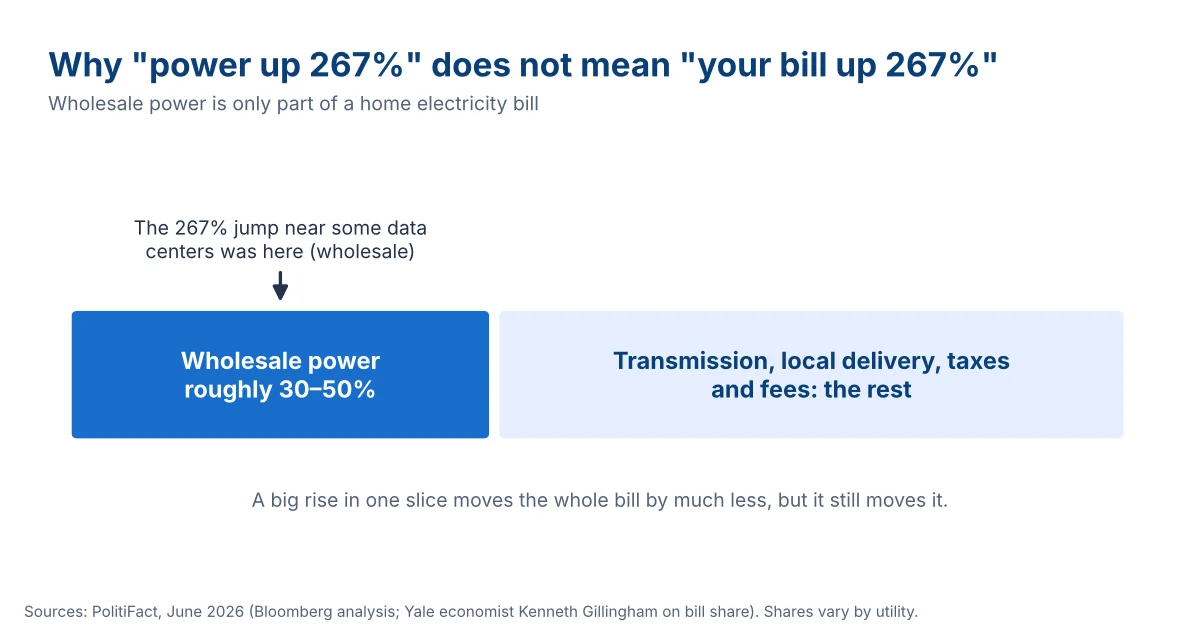
A Yale economist told PolitiFact that wholesale supply makes up roughly 30% to 50% of a residential bill. The rest pays for transmission lines, local delivery and taxes. So the post overstated the effect, but the direction was right.
What the evidence actually shows
US data centers used about 4.4% of the country's electricity in 2023, according to a report by Lawrence Berkeley National Laboratory for the Department of Energy. By 2028, that could reach 6.7% to 12%.
The clearest effect so far is in PJM, the grid operator serving all or part of 13 states and Washington, D.C. PJM runs auctions to pay power plants to be available when demand peaks. Its independent market monitor estimated that data-center demand added $9.3 billion, or 174%, to those capacity costs for 2025–26. Another auction in July 2026 cleared at $325 per megawatt-day for 2028–29, again driven mainly by new data centers, according to the market monitor.
The research group IEEFA estimated the 2025–26 capacity increase meant about $18 more a month for an average household in western Maryland and about $16 in Ohio.
Data centers are not the only reason
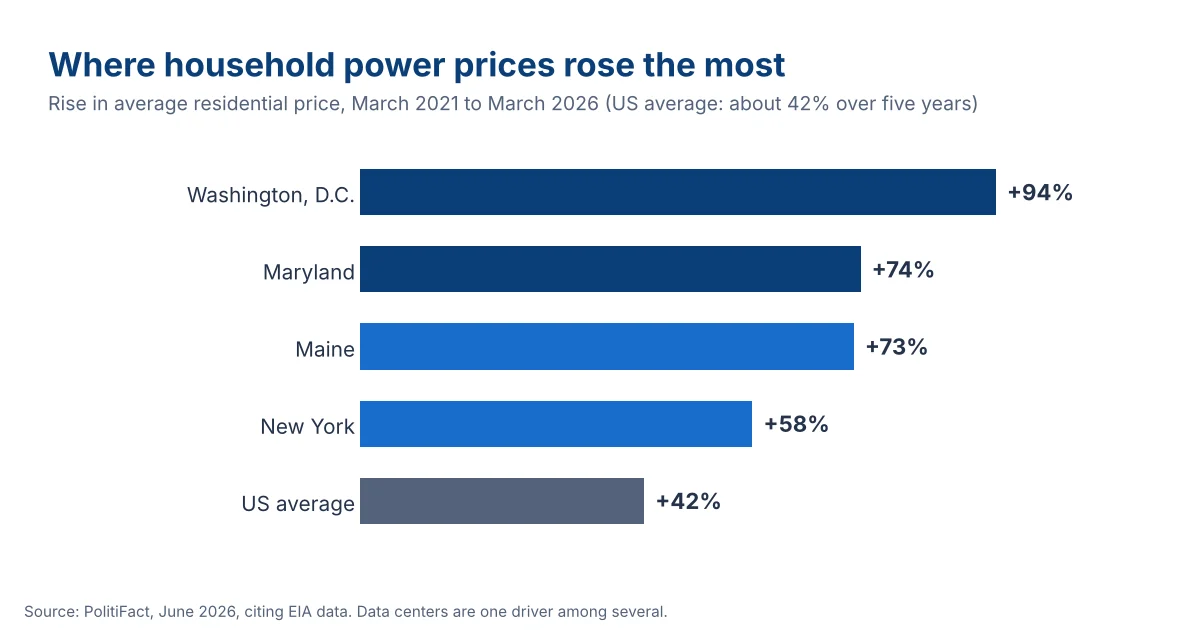
Bills were rising before the AI boom. A 2026 Lawrence Berkeley National Laboratory report also points to more expensive equipment, an ageing grid that needs replacing, and clean-energy requirements. Maine's large increase, for example, is not mainly a data-center story.
States are starting to respond. Virginia, home to one of the world's largest clusters of data centers, added a tax on data-center electricity use from July 2026. Other states are debating rules to make large new users pay more of the grid costs they cause.
How to budget for rising power bills
- Use a twelve-month average. Add up your last year of bills and divide by twelve, then set that aside every month.
- Keep a small buffer for winter and summer peaks. A sinking fund smooths out the expensive months.
- Ask your utility about budget billing. Many spread costs evenly across the year.
- Compare fixed rates where you can choose a supplier. In some regions you can lock a rate; read the contract length and exit fees.
- Shift heavy use off-peak if your utility offers time-of-use pricing.
- Record each electricity bill as an expense in a Utilities category.
- Compare months in Insights to spot a steady rise early.
- Set it up as a recurring expense if you pay a fixed budget-billing amount.
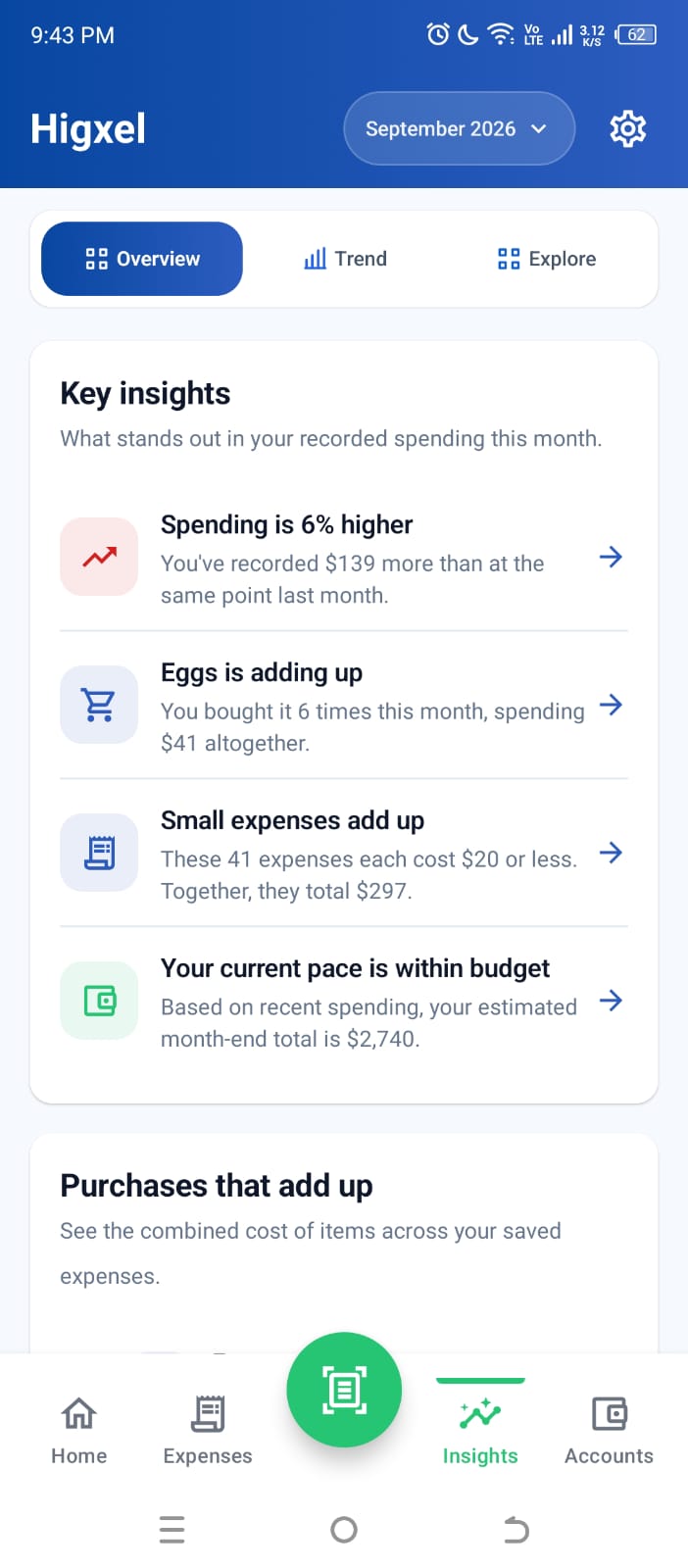
Screen shows sample data.
FAQ
Common questions
Do data centers raise electricity prices?
They can, especially in regions with many of them. In the PJM grid, the market monitor estimated data-center demand added $9.3 billion to capacity costs for 2025–26.
Is it true bills went up 267% near data centers?
No. PolitiFact rated that Mostly False because 267% described wholesale power prices at some grid points, not household bills.
How much electricity do data centers use?
About 4.4% of US electricity in 2023, possibly 6.7% to 12% by 2028, according to a Lawrence Berkeley National Laboratory report.
Written with AI assistance by Higxel Editorial. Figures come from the sources listed; any example figures are labelled. This is general information, not financial or investment advice. Sources checked November 3, 2026. Some sources describe one country; local rules and costs differ.
Sources
Further reading
- PolitiFact: data centers and rising electricity costs (June 2026)
- US Department of Energy: report on electricity demand from data centers (December 2024)
- Yahoo Finance / Moneywise: the AI data center boom and power costs (December 2025)
- Citizens Utility Board: PJM capacity auction results (July 2026)
- Holland & Knight: Virginia preserves data center tax incentive (August 2026)