
Quick answer
Prices can differ by person, so compare before you pay
Some companies test or personalize prices using data such as your location, browsing and purchase history. You can't see the algorithm, but you can compare: check prices logged out or in a private window, compare the app with the store or its website, and keep a short list of what your usual items normally cost.
Same cart, different price
In December 2025, Consumer Reports, Groundwork Collaborative and More Perfect Union published an investigation in which more than 400 volunteers in four US cities shopped for identical items on Instacart at the same time. Prices for the same item were up to 23% above the lowest price shown, and some items appeared at five different prices at once. A dozen eggs at one Safeway in Washington, D.C., ranged from $3.99 to $4.79. For staples such as cereal, pasta and peanut butter, the average gap between lowest and highest price was 13%, and whole baskets differed by about 7% on average.
The researchers estimated the difference could cost a family of four about $1,200 a year. Instacart said its tests were randomized and the differences "negligible". The week before it acted, the FTC sent Instacart a civil investigative demand about its pricing. On December 22, 2025, Instacart ended the experiments, saying they had "missed the mark for some customers" and that shoppers buying the same item from the same store on the same day would see one price.
Dynamic, tested, personalized: three different things
| Type | What it means | Example |
|---|---|---|
| Dynamic pricing | The price moves with demand or time, but everyone sees the same price at that moment | Ride fares at rush hour |
| Price testing | Random groups of shoppers see different prices to measure reactions | The Instacart experiments |
| Personalized or surveillance pricing | The price is set using data about you, such as location, browsing or purchase history | What the FTC is investigating |
In July 2025, Delta Air Lines drew questions from US senators after saying it used AI-assisted pricing, built with the company Fetcherr, on about 3% of domestic fares, with plans to reach 20%. Delta told lawmakers the system uses anonymized market and booking data, not personal data, to set fares.
What regulators have found
In January 2025, the US Federal Trade Commission released early findings from its study of pricing companies. It found that details such as precise location, browsing history, mouse movements and items left in a shopping cart can be used to tailor prices. In one example, a shopper profiled as a new parent could be shown pricier baby thermometers first. The intermediaries studied worked with at least 250 clients, including grocery stores and clothing retailers.
On August 19, 2026, the FTC proposed an enforcement policy statement. It says businesses should clearly disclose personalized pricing when shoppers wouldn't expect prices to depend on their personal data, and that presenting a personalized price as standard, or dressing up a higher price as a loyalty discount, could be deceptive.
New York went further. Since November 10, 2025, businesses that set prices with algorithms using personal data must show the statement "THIS PRICE WAS SET BY AN ALGORITHM USING YOUR PERSONAL DATA." The US House Oversight Committee has also opened an investigation into AI pricing.
These findings come from the US, but the checks below work anywhere.
How to check you're getting a fair price
- Compare the price while logged out, or in a private browser window.
- Compare the app with the store's website or the shelf price.
- Watch the "original" price as well as the sale price. Consumer Reports found cases where Instacart kept the sale price the same but changed the "original" price shown.
- Compare unit prices, not pack prices.
- Keep a short list of what your ten most-bought items normally cost.
- Turn off location access and ad tracking for shopping apps that don't need them.
- Scan grocery receipts; Higxel reads each item and its price.
- Open Insights to see repeated purchases, how often you bought them and what they cost in total.
- If a regular item jumps in price, compare stores before your next shop.
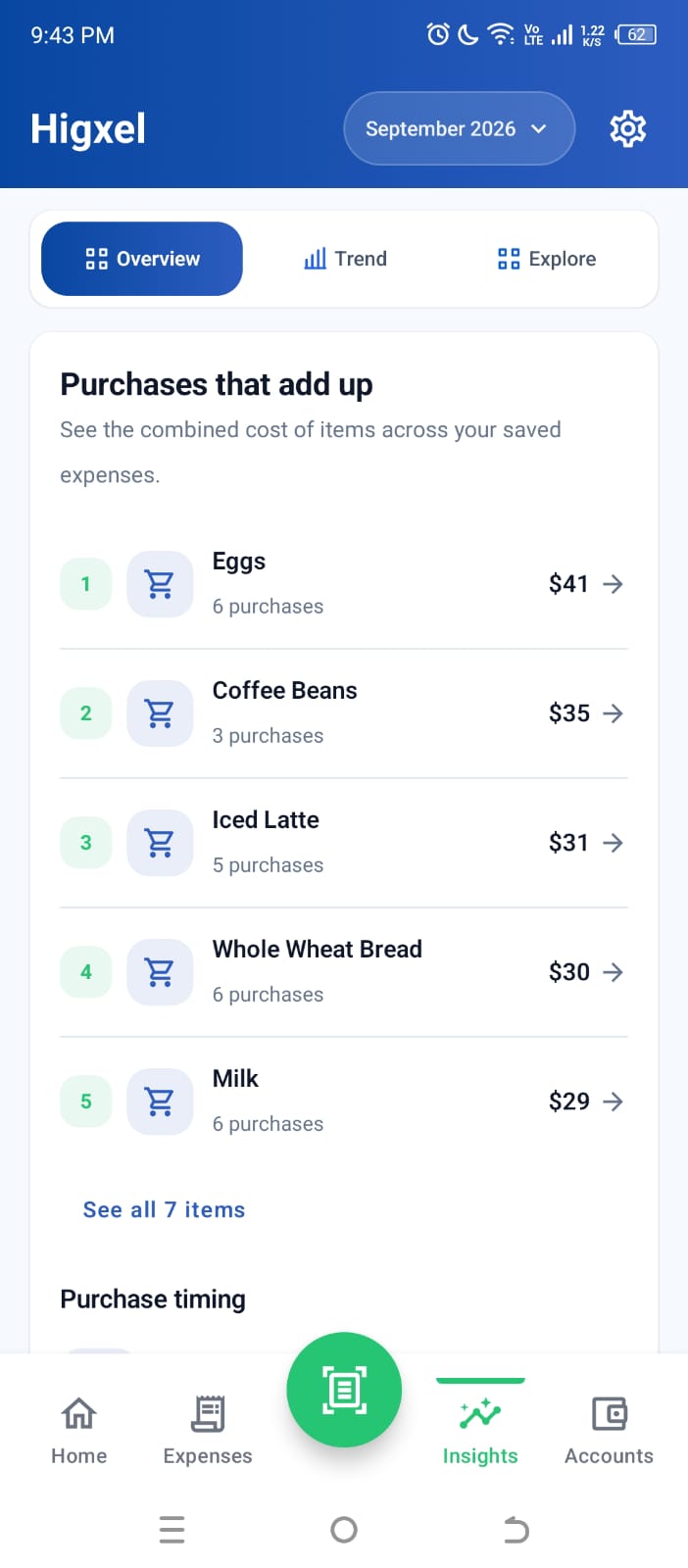
Screen shows sample data.
FAQ
Common questions
Is personalized pricing legal?
In the US it isn't banned outright, but the FTC says it must not be deceptive, and New York requires a disclosure. Rules differ in other countries.
Does a private browser window stop it?
It can remove some signals, such as cookies and your signed-in account, but not everything—your location can still be estimated.
Is dynamic pricing the same as surveillance pricing?
No. Dynamic pricing changes with demand for everyone; surveillance pricing uses data about you specifically.
Written with AI assistance by Higxel Editorial. Example figures are made up to show the method; this is general information, not financial advice. Sources checked October 29, 2026. Some sources describe one country; local rules and costs differ.
Sources
Further reading
- Consumer Reports: new report exposes Instacart's hidden price games (December 9, 2025)
- SiliconANGLE: Instacart shuts AI pricing experiments following scrutiny (December 22, 2025)
- FTC: surveillance pricing study indicates a wide range of personal data used to set individualized prices (January 2025)
- Skadden: FTC proposes enforcement policy statement on personalized pricing (August 2026)
- Kelley Drye: New York's algorithmic pricing disclosure law takes effect
- AltexSoft: Delta responds to concerns over AI-driven pricing
- House Oversight Committee: investigation into AI used to set consumer prices