
Quick answer
A burst would be felt through jobs, savings and credit
If AI spending fell sharply, the effects would most likely reach ordinary people in three ways: lower values in retirement and index funds that hold a lot of tech, job losses in tech and related industries, and tighter lending. Nobody knows whether or when it will happen. The steps that help are the same as for any downturn: an emergency fund, manageable debt, and knowing what you actually own.
What happened last time
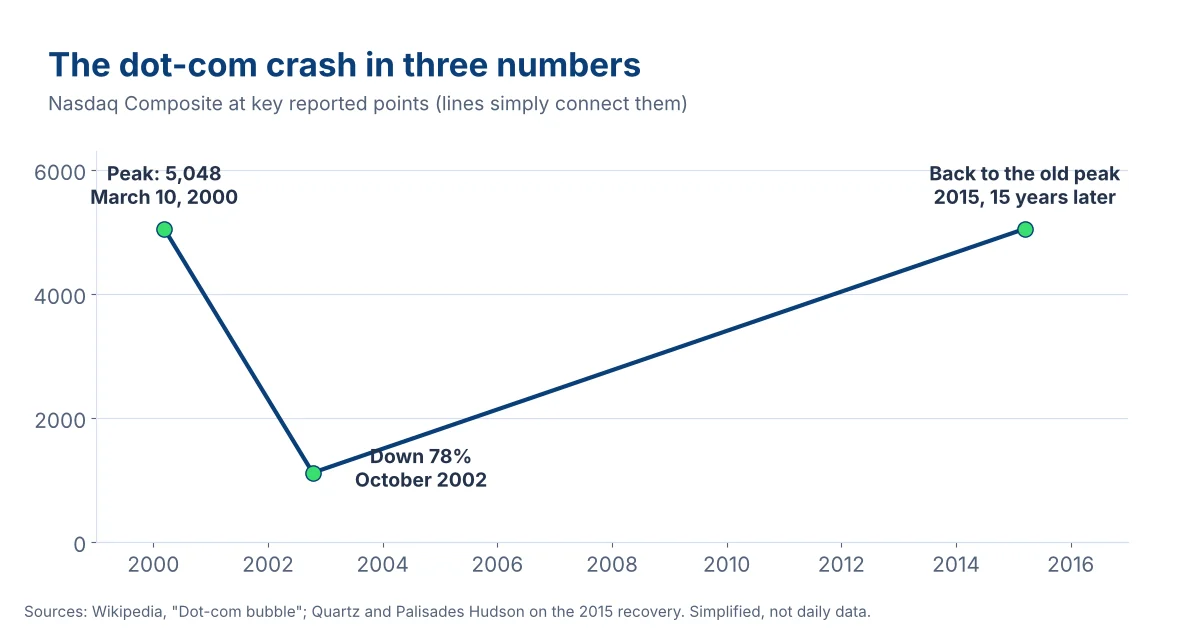
The dot-com bust is the closest modern example. After the peak, internet stocks fell about 75% by November 2000. Cisco, then one of the most valuable companies in the world, lost 80% of its value. Pets.com went out of business nine months after it listed on the stock market.
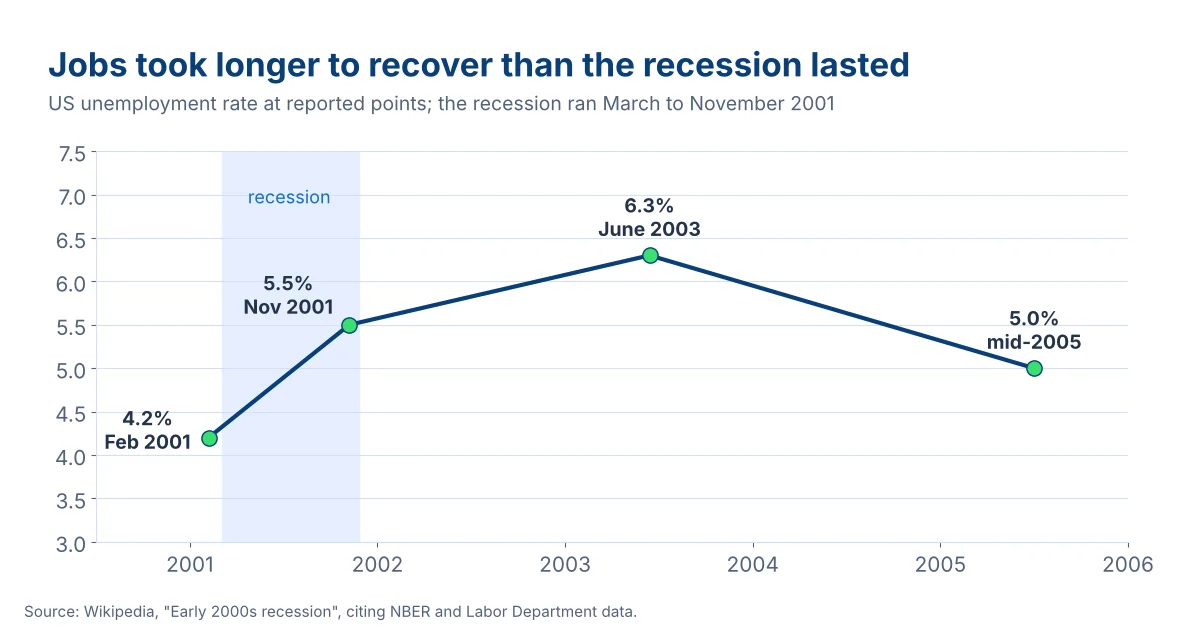
The recession itself was short, from March to November 2001. The job damage lasted much longer. Unemployment rose from 4.2% in February 2001 and kept rising after the recession ended, peaking at 6.3% in June 2003. The US lost about 1.7 million jobs in 2001 alone.
Who would feel an AI downturn
- People with index funds and pensions. The ten largest companies make up almost 40% of the S&P 500, and many are tied to AI. A fall in those shares would show up in ordinary retirement accounts.
- Tech and construction workers. Much of today's growth comes from building data centers. Harvard economist Jason Furman calculated that this kind of investment accounted for 92% of US growth in the first half of 2025.
- Borrowers. JPMorgan estimates $4.1 trillion of AI building will be financed with debt by 2030. If lenders took losses, loans of all kinds could get harder to get.
- Places with data centers. Local governments counting on data-center tax revenue would feel any slowdown.
Why it might not look like 2000
The dot-com boom was led by young companies with little revenue. Today's AI spending comes mostly from very profitable giants that can slow down without collapsing. A slowdown in AI spending could be painful without being a crash. It is also possible the spending pays off. History rhymes; it does not repeat.
How to be ready for any downturn
- Build an emergency fund. Job losses, not stock prices, do the most damage to household budgets. Even a small buffer buys time.
- Keep high-interest debt down. Debt is hardest to carry when income stops.
- Know what you own. Check whether your funds lean heavily on the same few companies. Our article on AI stocks in your fund shows how.
- Don't react to headlines. Selling in a panic locks in losses; decisions about investments are best made calmly and, if needed, with a licensed adviser.
- Know your monthly essentials. If income drops, you need to know quickly what you can't cut.
- Record your fixed bills as recurring expenses.
- Use categories to separate essentials from extras.
- Check Insights to see your true monthly minimum.
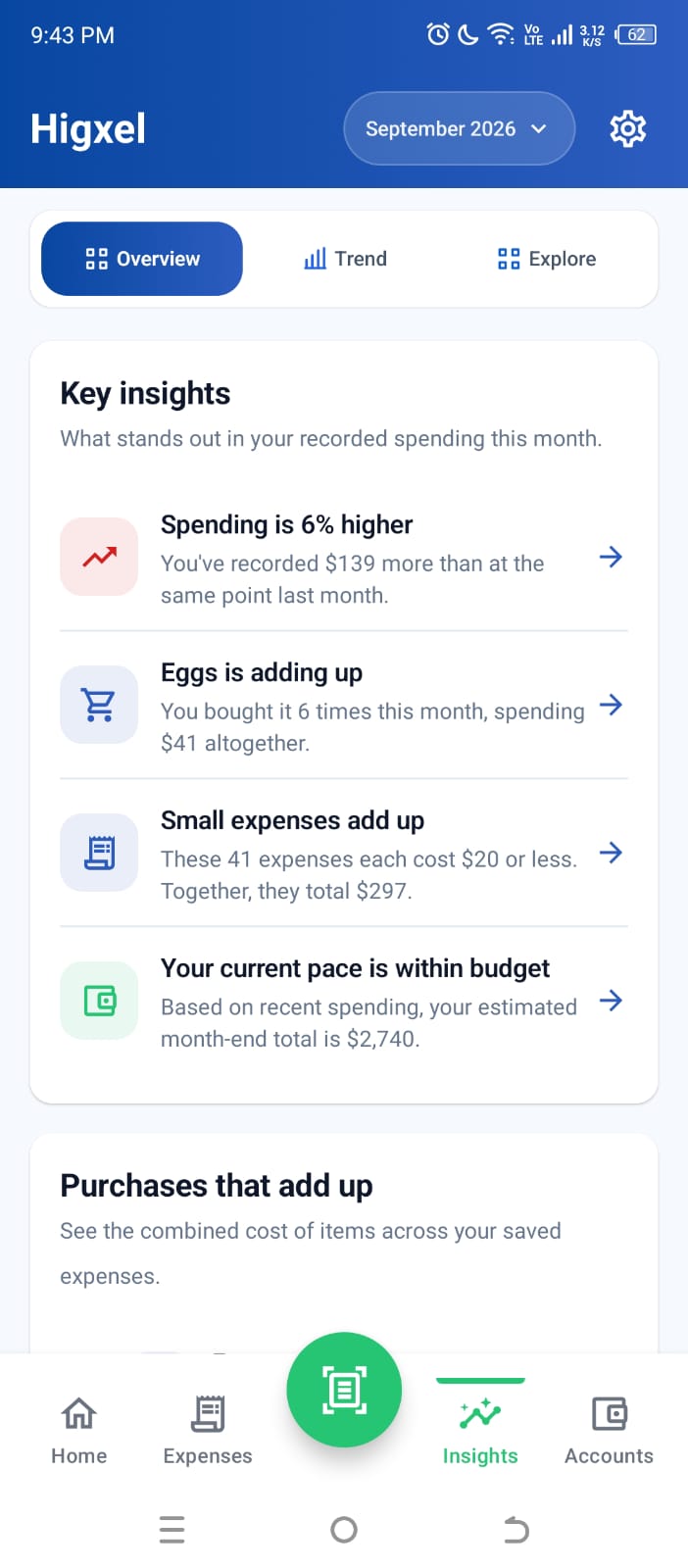
Screen shows sample data.
FAQ
Common questions
Will the AI bubble burst?
Nobody knows. Some see bubble signs in the gap between spending and revenue; others say the spending is backed by large profits. This article is not a prediction.
How long did it take to recover from the dot-com crash?
The Nasdaq took about 15 years, until 2015, to regain its March 2000 peak. US unemployment peaked at 6.3% in June 2003.
Should I sell my tech stocks?
This article cannot tell you that. Investment decisions depend on your situation; a licensed financial adviser can help.
Written with AI assistance by Higxel Editorial. Figures come from the sources listed; any example figures are labelled. This is general information, not financial or investment advice. Sources checked November 3, 2026. Some sources describe one country; local rules and costs differ.
Sources