
Quick answer
Free AI is paid for with attention, data or upgrades
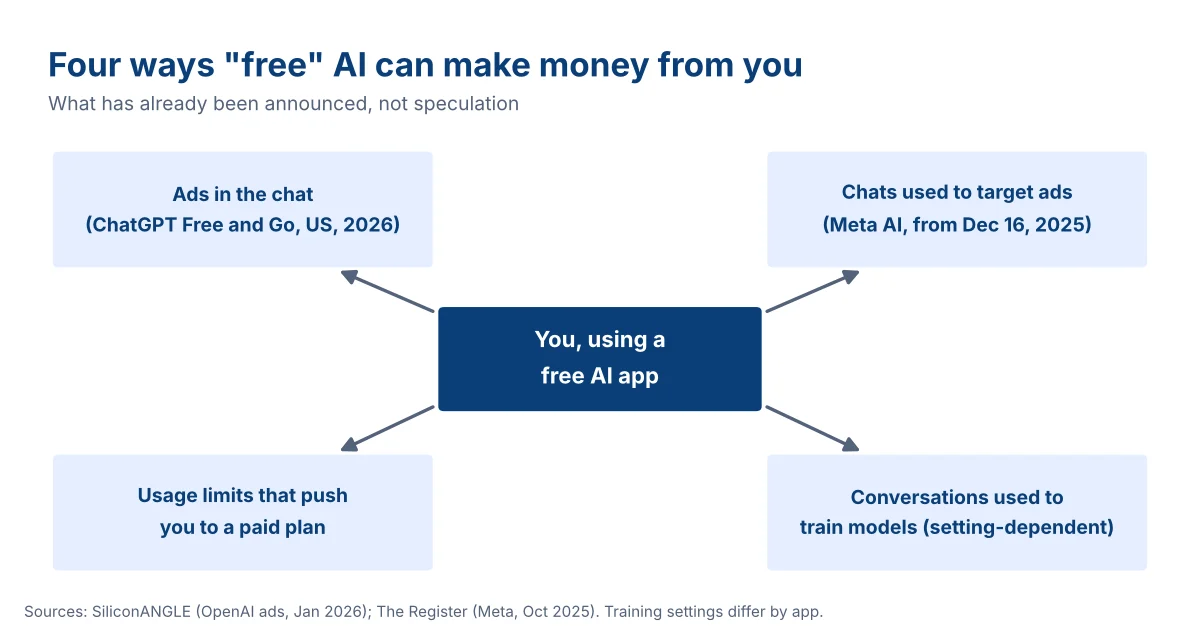
Running AI is expensive, so free AI tools have to earn money somehow. The main ways already announced are ads shown in or around chats, conversations used to personalize ads, and usage limits that push you towards a paid plan. Your conversations may also help train future models, depending on the app and your settings. Read the settings, and keep anything you wouldn't tell an advertiser out of the chat.
Why "free" has to be paid for somehow
A single chatbot answer uses computing power in a data center. Multiply that by hundreds of millions of users and the bill is enormous. With only about 5% of chatbot users paying, according to analysts quoted by the Boston Globe, the free majority has to pay in another way.
Ads in the conversation
In January 2026, OpenAI announced ads for adult users of the free ChatGPT plan in the US and its $8 Go plan. It said it would not share conversations with advertisers, and that users could turn off ad personalization and clear their history.
Meta went further with its assistant. From December 16, 2025, it began using text and voice chats with Meta AI to personalize ads and posts. It said it would not use chats about religion, sexual orientation, politics, health, race or ethnicity, philosophical beliefs or trade union membership for ads. Users in the EU, the UK and South Korea were excluded at first.
Limits that nudge you to pay
The quieter lever is the free tier itself. Free plans increasingly get weaker models and fewer "deep thinking" answers, according to the Boston Globe. That is not hidden; it is the business model. But it means a free tool can cost you time, and the upgrade prompt tends to appear exactly when you need the answer most.
The bigger picture
The same pressure that brings ads also shapes prices. Ad-free tiers tend to cost more over time, as streaming showed. And some shops are already experimenting with personalized prices based on data about you, which we cover in our article on surveillance pricing.
- Record expenses yourself instead of pasting bank statements into a chatbot.
- Use categories and Insights to answer "where did my money go?"
- Export to Excel when you need a copy, and decide who sees it.
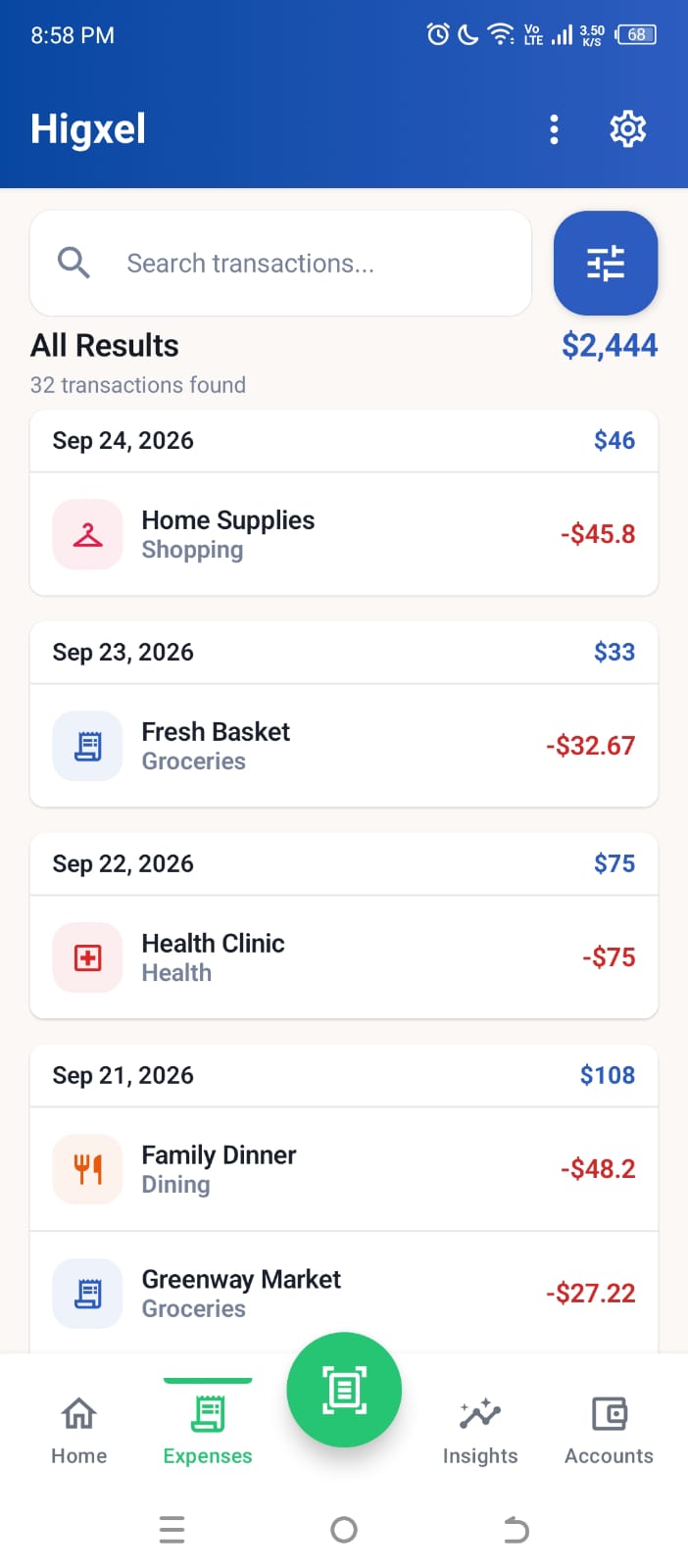
Screen shows sample data.
FAQ
Common questions
Does ChatGPT have ads?
In the US, OpenAI began testing ads in early 2026 for adults on the free plan and the $8 Go plan. It said conversations are not shared with advertisers.
Does Meta use my AI chats for ads?
Yes, from December 16, 2025, in most regions. Meta said it excludes chats on some sensitive topics, and users in the EU, the UK and South Korea were excluded at first.
Can I stop AI apps from training on my chats?
Many apps have a setting for this, but it differs by company and plan. Check the app's privacy or data controls.
Written with AI assistance by Higxel Editorial. Figures come from the sources listed; any example figures are labelled. This is general information, not financial or investment advice. Sources checked November 3, 2026. Some sources describe one country; local rules and costs differ.
Sources